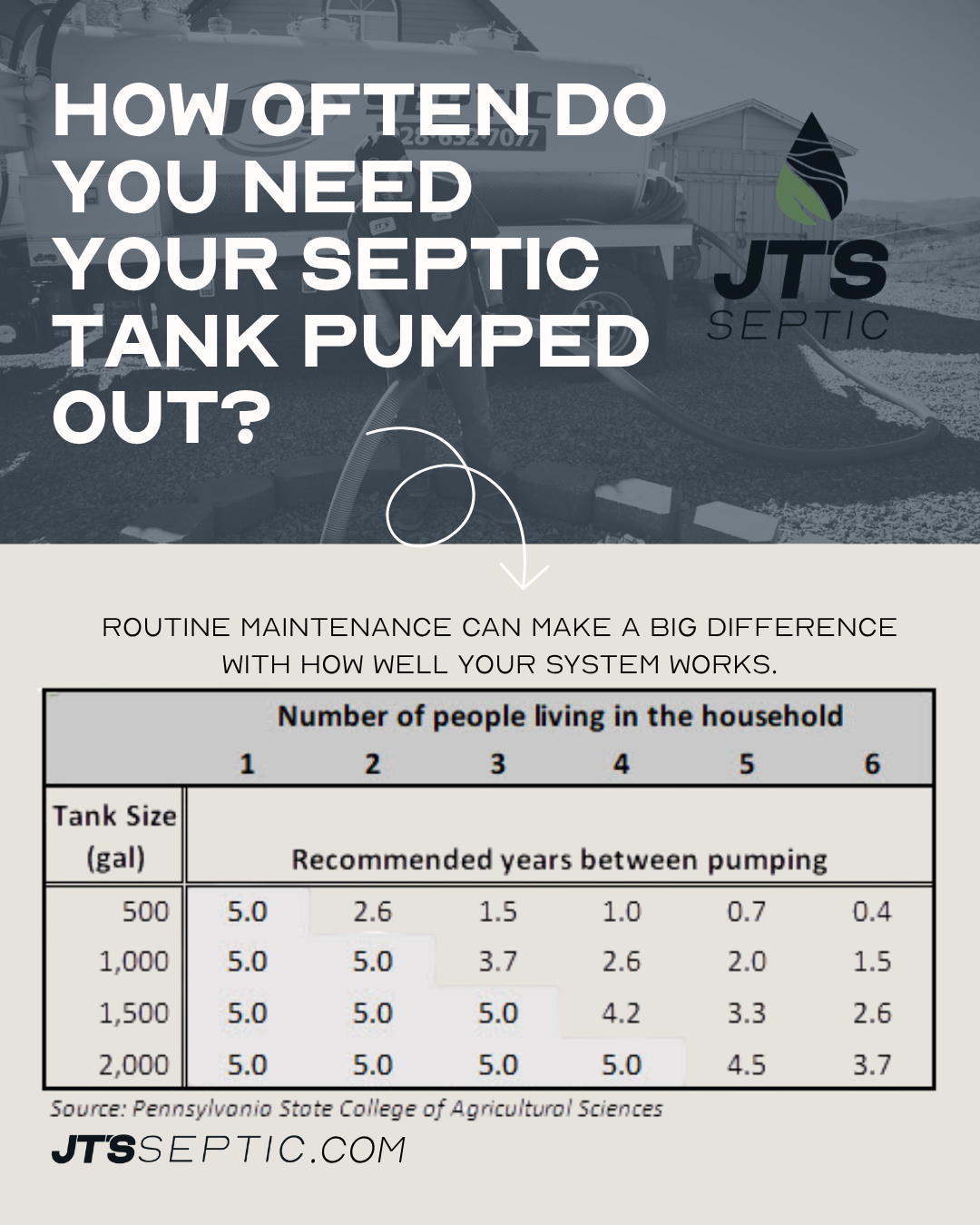
HOW OFTEN SHOULD YOU PUMP YOUR TANK?
Routine septic maintenance is one of the most important steps in protecting your home, your property, and your wallet. While septic systems are built to handle years of use, every tank eventually fills with solids that must be professionally removed. Regular pumping prevents backups, system failures, foul odors, and expensive repairs.
Why Routine Pumping Matters
Your septic tank separates wastewater into three layers:
Scum (oils and grease) floating on top
Effluent (liquid wastewater) in the middle
Sludge (solid waste) settling at the bottom
Over time, sludge and scum accumulate. If too much builds up, solids can escape into your drain field, causing clogs, reduced performance, or complete system failure. Pumping removes these layers before they create costly problems.
General Pumping Guidelines
How often your tank should be pumped depends primarily on:
Household size
Septic tank capacity
Water usage habits
Garbage disposal use
System age and condition
Warning Signs Your Tank May Need Pumping Sooner
Even if you’re within your recommended schedule, watch for these red flags:
Slow drains throughout the house
Gurgling pipes
Sewage odors indoors or outdoors
Standing water near the drain field
Lush green grass over the septic area
Sewage backups
If any of these occur, call JT’s to schedule your pump out appointment! 928-632-7077